
Replacing your aluminum foundry isn’t as simple as changing your car insurance provider. Engineers and procurement teams face real risks when transitioning production. From quality issues and rising costs to lead time uncertainty and supply chain disruptions, moving to a new foundry requires careful evaluation.
We’re Precision Enterprises. We’ve been in the foundry business since 1945 and have satisfied customers worldwide with unparalleled services and expertise. Consistency from part to part and run to run, is what our customers have come to expect….and we deliver. We’re experts when it comes to running a foundry. So, when customers come to us after leaving an underperforming foundry, we listen. Here are their top three concerns customers complain about over and over when replacing an underperforming foundry. We’ve also included the specific questions you should be asking when searching for a new aluminum foundry and of course how we address each here at Precision.
Quality Concerns
You’ve already invested time and effort establishing quality standards with your current foundry. After multiple sample iterations, parts finally passed inspection, only for production runs to fall short once parts arrived on your floor.
Common quality issues include:
- Surface finish problems
- Wall thickness variation
- Non-conforming material specifications
- Inconsistent repeatability from run to run
When quality slips, the risk extends beyond the foundry floor. Engineers may struggle to maintain product standards, leading to downstream issues, customer dissatisfaction, and costly rework.
Questions to Ask a New Foundry About Quality (and Our Answers)
Are they ISO certified?
Precision Enterprises is ISO 9001 certified, with documented, published, and auditable quality procedures.
How long have they been in business?
Precision Enterprises has been in operation since 1947, bringing decades of aluminum casting and machining experience.
What secondary services do they offer?
Precision Enterprises provides a wide range of secondary operations and takes full responsibility for all sourced work. All secondary-finished parts are returned to in-house inspection to ensure they meet print and delivery requirements.
Our available secondaries include:
- Wet Paint
- Powder Coat
- Hard-Coat Anodize
- Polishing
- Bead Blast
- Aluminum Oxide Blast
- Pressure Testing
- Minor Assemblies
Precision has also developed proprietary powders that allow machining after powder coating, eliminating masking and reducing overall cost.
Do they have in-house engineering?
Precision Enterprises offers full in-house engineering support. Whether you provide a blueprint, sample, or CAD file, their engineering team focuses on fit and function while ensuring castability.
Our engineering capabilities include:
- Adding draft
- Suggesting machining stock
- Confirming wall thickness
- Identifying key dimensions tracked throughout production
- Alloy recommendations
- Tensile strength and elongation considerations
- Flow analysis software to ensure sound castings
- Determine Datum Points
- A,B, and C surfaces as far as finish requirements
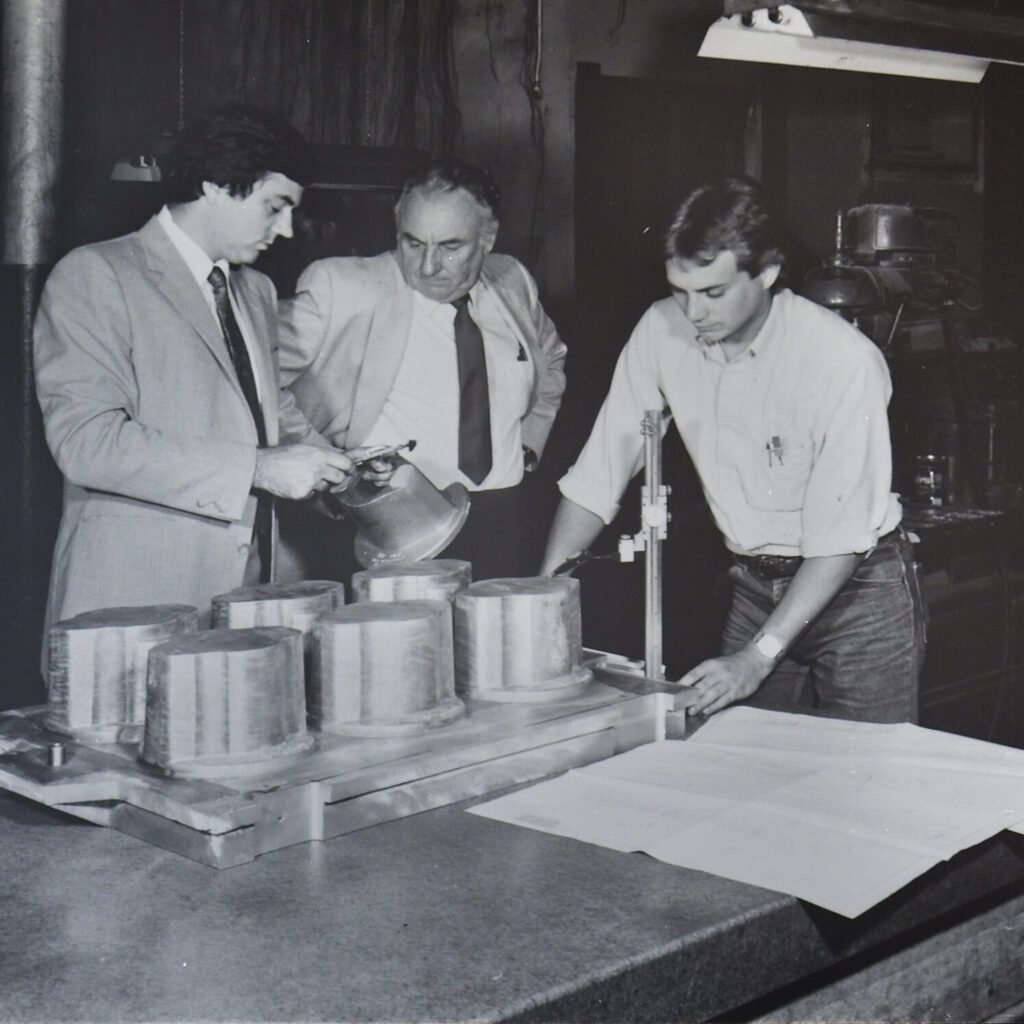
Precision also integrates advanced pattern development technology. Models are analyzed for castability and CNC-machined from aluminum billet. They support all major CAD platforms, including Pro/E and SolidWorks®, and offer reverse engineering services to create models and blueprints from existing castings.
What industries do they specialize in?
Precision Enterprises specializes in these industries:
- Medical & Medical Device Manufacturers
- Automotive & Aftermarket Automotive
- Robotics
- Electric & Hybrid Vehicles
- Electrical Power Systems
- Musical Industry
- Pumps & Valves
- Batteries
- Marine
- Agriculture
- Mining
Do they pour multiple alloys?
- 319 Aluminum
- 319SR Aluminum
- 356 Aluminum
- Almag 535
- Tenzaloy 713
- 705 Aluminum
- A356
Do they use alloy-dedicated furnaces?
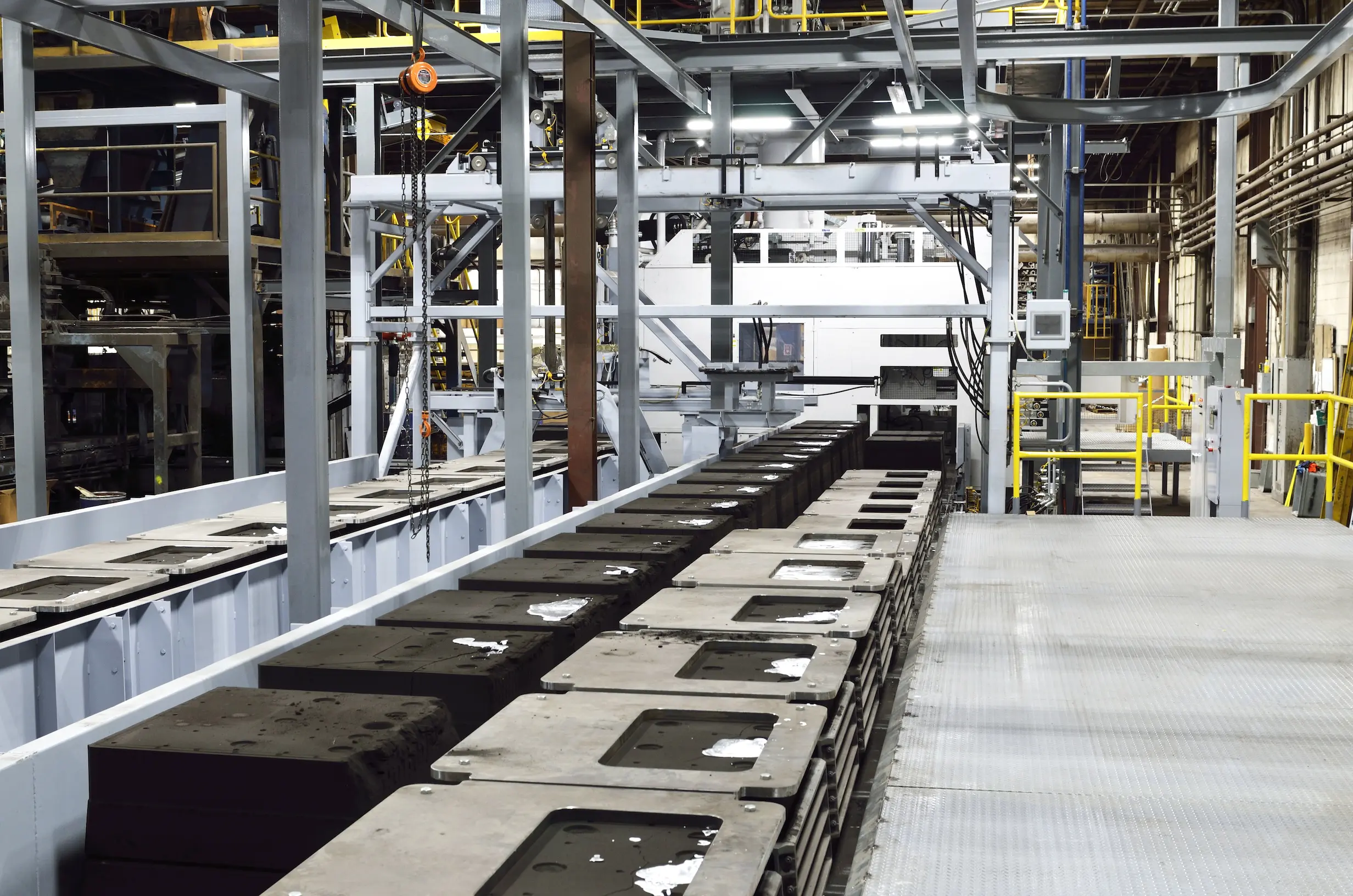
Precision Enterprises operates 11 alloy-dedicated furnaces, significantly reducing the risk of cross-contamination.
What are their typical lead times?
Our typical lead times are 4–6 weeks, depending on pattern complexity and core requirements.
Who audits them regularly?
Precision Enterprises is regularly audited by medical manufacturers, including industry leaders such as GE and Stryker Medical.
What sizes and alloys do they offer?
Precision produces castings ranging from very small to very large, across multiple aluminum alloys.
What is their financial stability?
Precision Enterprises carries no debt, allowing continued investment in foundry and machining technology to reduce lead times and improve tolerances.
Cost Implications
It’s no secret that cost is usually a major, if not the driving factor in foundry changes, but the initial quote rarely tells the full story. Hidden costs…from tooling changes to secondary processing and scrap…can quickly eat into any illusion of savings.
Engineers are frequently tasked with balancing cost reductions against quality and reliability.
Cost-Related Questions to Ask
Can the new foundry use existing tooling?
In most cases, Precision Enterprises can reuse, adapt, partially utilize, or re-gate existing patterns, minimizing upfront tooling costs.
Do they offer your required alloy?
Precision pours multiple aluminum alloys. (See our 2026 Engineer’s Alloy Guide.)
Can they machine castings in-house?
With more than 70 years of foundry and machining expertise, Precision Enterprises provides CNC machining for prototype through high-volume production, delivering tight tolerances and exact specifications.
Do they certify their metal?
Precision purchases aluminum only from certified smelters, with metal certifications attached to each batch. Test bars are poured and sent to certified labs to verify alloy composition.
Do they offer Vendor Managed Inventory (VMI)?
Yes. Precision’s VMI program allows for economically optimized batch production rather than rigid blanket releases. Agreed inventory levels are maintained to accommodate fluctuations in customer demand.
Do they degas metal prior to every pour?
Degassing is critical to controlling porosity. At Precision Enterprises:
- Aluminum is degassed in the furnace using argon or other materials
- Slag and dross are removed prior to pouring
- Melt temperature is carefully controlled to avoid excess gas absorption
Before each heat is released, Precision pours a test chip, solidifies it under vacuum, sections and polishes it, and inspects it for porosity. Any gas present becomes highly visible under vacuum conditions.
Do they monitor sand and moisture content daily?
Yes. Precision captures this data through computerized controls monitoring:
- Sand temperature
- Moisture content
- Binder percentage
These variables are adjusted per job to control finish, porosity, heat dissipation, and other casting characteristics.


Lead Time, Reliability, and Supply Chain Disruptions
Switching foundries introduces uncertainty into established supply chains. New relationships can result in unpredictable lead times, production delays, and scheduling challenges.
For engineering-driven organizations, reliability is just as important as price.
Precision Enterprises reduces lead time risk by offering multiple secondary operations under one roof. The most common combinations, in-house machining and paint or powder coating, can save weeks of production time by eliminating:
- Additional vendors
- Multiple freight movements
- Extra incoming inspections at your facility
Performing these operations at a single location shortens timelines, improves accountability, and simplifies logistics.
Precision Enterprises Can Be Your Next Foundry!

Precision Enterprises built its business specifically to address the quality, cost, and lead time concerns companies face when replacing an underperforming aluminum foundry.
If you’re looking to replace your foundry, reach out to our team today at 731-642-8709 or fill out the contact form here.





No responses yet